











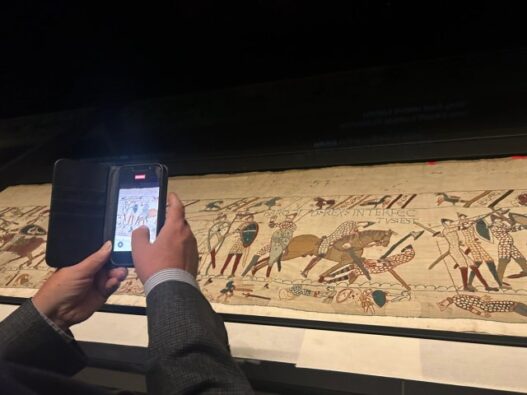
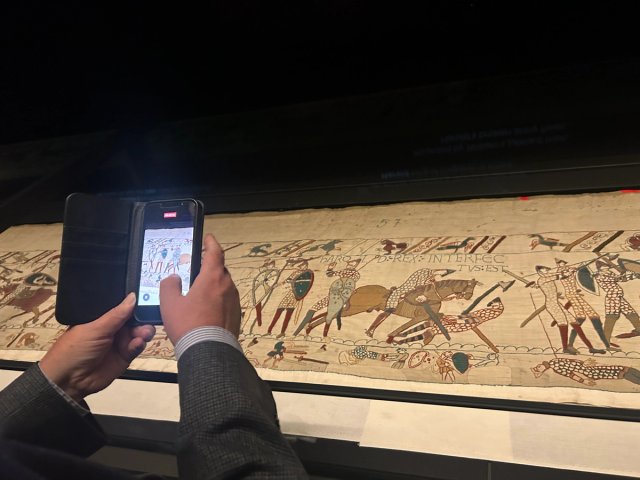
The British Museum has officially instituted a strict ban on visitor photography within its highly anticipated exhibition of the Bayeux Tapestry. The decision was prompted by growing concerns that the practice of taking photographs was causing significant delays and disrupting the flow of visitors attempting to view the historic artifact. The 11th-century masterpiece, a 70-meter-long embroidery depicting the Norman conquest of England, is currently on loan to the United Kingdom for the very first time since its creation nearly 1,000 years ago. This unprecedented display has generated an extraordinary level of public interest, leading to crowded galleries and logistical challenges for the institution.
Immediate Policy Adjustments Following Opening Day
When the landmark exhibition first opened its doors to the public on 10 September, visitors were initially permitted to take photographs of the ancient textile. However, the policy was abruptly changed the following day. On 11 September, the museum’s specialist, Maxwell Blowfield, reported that the British Museum had revised its guidelines, with an official notice appearing on its website stating that photography of the tapestry was now prohibited. The museum subsequently released a statement confirming the reasoning behind this rapid policy shift.
According to an official spokesperson for the British Museum, the decision was made to prioritize the visitor experience. The spokesperson stated that there has been enormous interest in viewing the tapestry, and the museum’s primary goal is to ensure that everyone who attends has the best possible experience. To achieve this, the institution decided to restrict photography while visitors are moving along the length of the tapestry, thereby preventing bottlenecks and ensuring a continuous flow of movement through the exhibition space.
Unprecedented Public Demand and Ticket Sales
The Bayeux Tapestry exhibition has proven to be an immense success in terms of public engagement. On the first day of public ticket sales, the British Museum recorded unprecedented demand, selling a record-breaking 100,000 tickets. The initial allocation of tickets sold out within a matter of hours. Museum administrators expect to welcome approximately one million visitors by the time the exhibition officially closes on 11 July 2027. To manage the vast crowds, the museum has implemented a system of timed entry slots, limiting each visitor’s access to 40 minutes.
During these 40-minute sessions, museum staff members and automated announcements are utilized to actively encourage visitors to keep moving at a steady pace alongside the flat display case that houses the delicate 70-meter embroidery. The physical layout of the exhibition requires visitors to walk in a continuous line to view the narrative scenes in sequence, making any pauses or delays highly disruptive to those walking behind.
The Economics and Pace of the Visitor Experience
The logistics of the exhibition have drawn close analysis from art critics and journalists. Writing for The Art Newspaper, critic Martin Bailey evaluated the practicalities of the 40-minute viewing window. Bailey pointed out that with a standard adult ticket priced at £33, the cost of the visit translates to almost £1 for every minute spent inside the gallery. Furthermore, because the Bayeux Tapestry contains 58 distinct historical scenes, visitors have an average of only 35 seconds to observe each individual scene if they wish to view the entire work within their allotted time. To maximize the value of the visit under these tight constraints, Bailey recommended that visitors thoroughly research and read up on the history of the tapestry and the Norman conquest before arriving at the museum.
Conservation Controls and Visitor Disruptions
The necessity of the photography ban became particularly clear during the opening week of the exhibition, when several operational issues were reported. Some ticket holders were reportedly turned away at the entrance because previous visitor groups had moved too slowly, largely due to taking photographs, which caused a backlog. According to a report by the publication Time Out, some visitors holding tickets for the final slot of the day reported that they had only managed to reach the halfway point of the 70-meter artifact when the gallery lights were turned off, cutting their visits short.
It is understood that the gallery lights must be switched off precisely according to a strict schedule due to conservation requirements. The loan agreement for the Bayeux Tapestry stipulates a strict limit on the number of hours the ancient textile can be exposed to light to prevent the degradation of its delicate fibers and organic dyes. The British Museum must strictly adhere to these preservation rules. In response to the disruptions experienced by visitors during the opening week, the British Museum has confirmed that affected individuals have been offered full refunds or the opportunity to reschedule their visits to a later date.