









In a ceremony held in Thessaloniki on Saturday, Greece and Bulgaria formally executed a significant cultural exchange, returning a “treasury” of historical relics and human remains. This exchange marks the culmination of five decades of intense bilateral cultural diplomacy. The high-profile event, marked by formal state ceremonies, represents a major milestone in diplomatic relations between the two European neighbors and signals a shifting international attitude toward the repatriation of cultural heritage.
A Historic Exchange of Relics and Royal Remains
The bilateral agreement involved the repatriation of highly valuable religious artifacts to Greece, alongside the return of the remains of Tsar Samuel, a highly revered medieval warrior ruler, to Bulgaria. The objects returned to Greece include 48 priceless ecclesiastical relics, such as icons, crosses, and ornate ceremonial vessels. These items were originally removed from churches and monasteries in northern Greece by Bulgarian military forces during the height of the First World War. For more than a century, these religious treasures had been preserved and safeguarded within the collection of the National History Museum in Sofia, Bulgaria.
In exchange, Greece returned the skeletal remains of Tsar Samuel, who ruled Bulgaria during the medieval period and is celebrated as a national hero for his efforts to maintain his kingdom’s independence against the Byzantine Empire. The ruler’s remains were originally discovered by archaeologists more than 60 years ago in a border region of Greece. The homecoming of the Tsar’s remains to the Bulgarian capital of Sofia was conducted with full state honors. The bones were transported on a Bulgarian military aircraft, escorted by fighter jets, and received with a 21-gun salute upon arrival. To allow the public to pay their respects, authorities organized free transportation for pilgrims traveling to the capital.
A Vision of Unity and Strategic Cooperation
During the handover ceremony in Thessaloniki, where Bulgarian military personnel were photographed by Giannis Papanikos of the Associated Press carrying the coffin containing the Tsar’s remains, Bulgaria’s Prime Minister Rumen Radev addressed the gathering. Radev, a former air force officer, emphasized the unifying nature of the exchange. He stated that the returned items belong to the peoples of both nations, forming a shared memory and bond. Radev noted that future generations deserve the opportunity to pay tribute to their ancestor, adding that while Tsar Samuel may have historically divided the two nations, his legacy now serves to unite them, strengthening their strategic cooperation and historical relations.
Implications for the Parthenon Marbles Dispute
Greek Prime Minister Kyriakos Mitsotakis used the occasion to highlight the broader global implications of the agreement, linking it directly to Greece’s ongoing campaign to retrieve the Parthenon sculptures from the United Kingdom. Mitsotakis stated that the international community is currently re-evaluating its long-held positions on the protection of cultural heritage. He argued that the joint initiative between Greece and Bulgaria rests on the fundamental principle that historical heirlooms and monuments should not be treated as spoils of war or as assets subject to circumstances subsequent to their creation.
Mitsotakis described the 50-year diplomatic effort required to reach the agreement as an example of the political will and determination necessary to resolve long-standing cultural disputes, specifically referencing the ongoing debate over the fifth-century BC Parthenon marbles. He expressed hope that the successful resolution of this bilateral dispute would send a clear message to Britain and persuade the British government to engage in a similar resolution based on truth, reason, justice, and morality.
The Greek Prime Minister clarified that Athens’ campaign for the return of the Parthenon sculptures is not based on a vague nationalistic claim, nor does it challenge the broader educational and preservationist missions of museums worldwide. Instead, he emphasized that the campaign centers on the physical integrity of the historical monument itself. The Parthenon, the principal temple on the Acropolis of Athens, represents a unique case of a universal monument that remains physically dismembered. Mitsotakis reiterated that Greece will not accept any temporary loan agreements or arrangements that imply recognition of foreign sovereignty over its own cultural treasures.
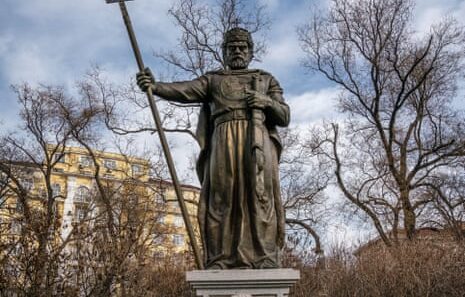
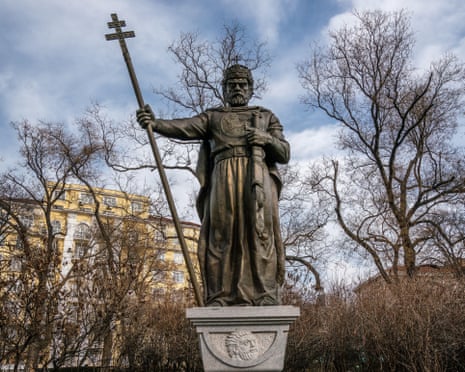
The Parthenon sculptures, which date back to the fifth century BC, were removed from the Acropolis under the direction of Lord Elgin, who served as Britain’s ambassador to the Ottoman Empire’s Sublime Porte. The circumstances of their removal remain highly controversial. Following his financial difficulties, Elgin sold the carvings to the British Museum in 1816, where they have remained on public display. The successful Greek-Bulgarian exchange, which also features a prominent statue of Tsar Samuel in Sofia, is being presented by Greek officials as a modern blueprint for resolving such historic cultural property disputes through mutual respect and diplomatic cooperation.