





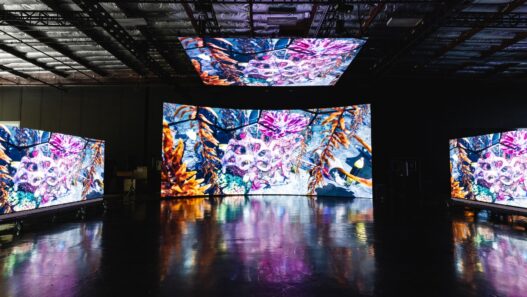

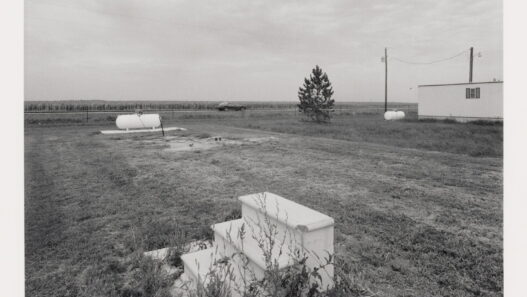




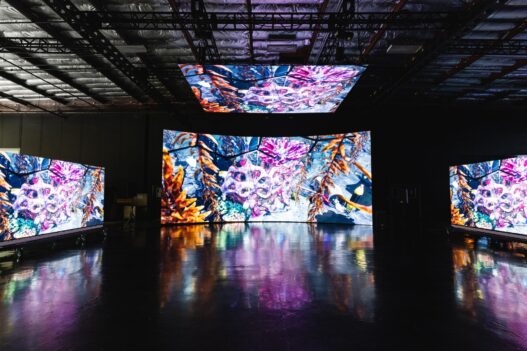

The seventh edition of the AURORA Biennial is set to take place in Dallas, Texas, from November 4 to November 21. Curated by Julia Kaganskiy and Tairone Bastien, this year’s iteration operates under the central theme States of Becoming. Positioned at a critical historical moment, the biennial directly responds to profound societal and global transformations, ranging from the climate crisis and the rapid advancement of artificial intelligence to the erosion of democratic norms. In the midst of these complex pressures, the curators aim to offer a space for collective calibration—a means of sensing where we are together before determining future directions. Rather than focusing solely on future-oriented promises or existential dread, the biennial invites participants to linger within the present long enough to understand the shift currently underway and consider who we want to become.
An Expanded Three-Week Citywide Program
Marking a key evolution in its structure, this year’s AURORA Biennial expands for the first time across a three-week timeframe. From November 4 through November 20, the biennial will activate Dallas with an extensive schedule of public events, including live performances, lectures, and interactive artist-led experiences. This multi-week format reflects AURORA’s ongoing mission to broaden access to contemporary arts while helping shape a more connected, creative, and culturally ambitious city.
The three-week activation culminates on November 21 with a free, citywide outdoor exhibition across three iconic Dallas locations: Dallas City Hall, the J. Erik Jonsson Central Library, and the AT&T Discovery District. Together, these sites will serve as public canvases for large-scale digital projections, media works, and site-responsive installations.
Institutional Collaborations and Program Highlights
To realize this extended edition, AURORA has partnered with a wide network of regional arts institutions and cultural organizations. Collaborating partners include Dallas Contemporary, the Nasher Sculpture Center, Keith House, the Thoma Foundation, and Cedars Union, among others.
Highlights of the event schedule running from November 4–20 include a presentation of work by Monira Al Qadiri, live digital and physical performances by Eva Papamargariti, and an interdisciplinary lecture series. The lecture series brings together artists, curators, technologists, and cultural thinkers to critically examine the core themes addressed throughout the biennial. Visually representing the event’s engagement with ecological futures and fluid landscapes is Emilija Škarnulytė’s video still Riparia (2023), presented courtesy of the artist.
International Roster of Presenting Artists
International in scope and presenting work at the leading edge of contemporary practice, the seventh AURORA Biennial convenes artists whose work shapes global conversations regarding the evolving relationship between art, technology, and society. The complete roster of presenting artists includes:
Monira Al Qadiri, Zach Blas, Eduardo Cassina, Melanie Clemmons & Zak Loyd, Josh Kline, Ksawery Komputery, Ezra Masch, LaJuné McMillian, Lauren Lee McCarthy, Christopher Meerdo, New Red Order, Trevor Paglen, Eva Papamargariti, Make Art with Purpose, Diana Rojas, Illeana Sisk, Sasha Stiles, Emilija Škarnulytė, Tramaine Townsend, Theo Triantafyllidis, Eric Trich, Derek Tumala, Holly Veselka, Amelia Winger-Bearskin, and Saya Woolfalk.
Through newly commissioned site-responsive installations, public performances, and community-engaged projects, the featured artists explore multi-layered changes taking place across local and global environments. Their works span a wide range of mediums and methodologies, including artificial intelligence, computational poetry, generative art, immersive media, experimental film, digital performance, public art interventions, ecological futures, and complex technology-driven installations.
Dallas City Hall as both Canvas and Subject
A central focal point of this year’s curatorial and visual framework is Dallas City Hall. AURORA has intentionally centered both its 2026 Biennial graphic design and its culminating November 21 outdoor exhibition on this major civic structure. Designed by architect I.M. Pei, Dallas City Hall is one of the city’s most recognizable architectural landmarks. Today, its future is the subject of an ongoing public civic debate over whether the building should be renovated, repurposed, replaced, or demolished.
AURORA is not attempting to resolve this ongoing public debate. Instead, the biennial utilizes the I.M. Pei building as a platform for artists and the public to examine what a municipality becomes when the spaces that define its identity are in transition. By placing contemporary art at the center of civic debate, AURORA turns the city of Dallas into both the subject of inquiry and the canvas for creative expression.
606 N. Edgefield
Dallas TX 75208
United States


