








The Helmut-Kraft-Stiftung, in collaboration with the Museum für Neue Kunst in Freiburg im Breisgau, is proud to announce that the Basel-based artist and filmmaker Basim Magdy, born in 1977, has been selected as the recipient of the Helmut-Kraft Art Prize 2026. This annual accolade recognizes contemporary practitioners who demonstrate exceptional artistic independence, technical quality, and a forward-thinking vision that enriches the cultural landscape.
The foundation’s board of directors issued a statement commending Magdy’s extensive multidisciplinary oeuvre, which has gained significant international acclaim for its unique and evocative visual language. By receiving this honor, Magdy enters a prestigious lineage of previous laureates, a list that includes luminaries such as Hans Haacke, Rosemarie Trockel, Anselm Kiefer, Imi Knoebel, Karin Sander, Havîn Al-Sîndy, Gerold Miller, Nicole Wermers, and Peter Stauss.
A Commitment to Institutional Presence
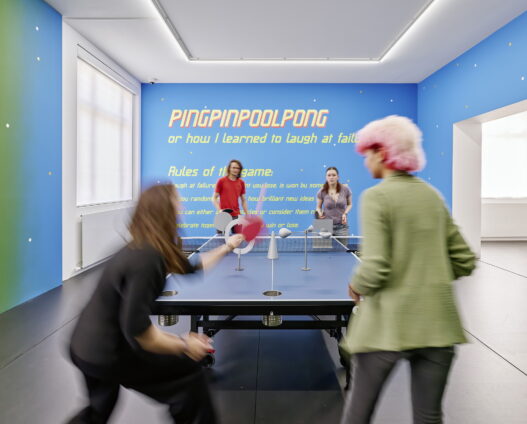
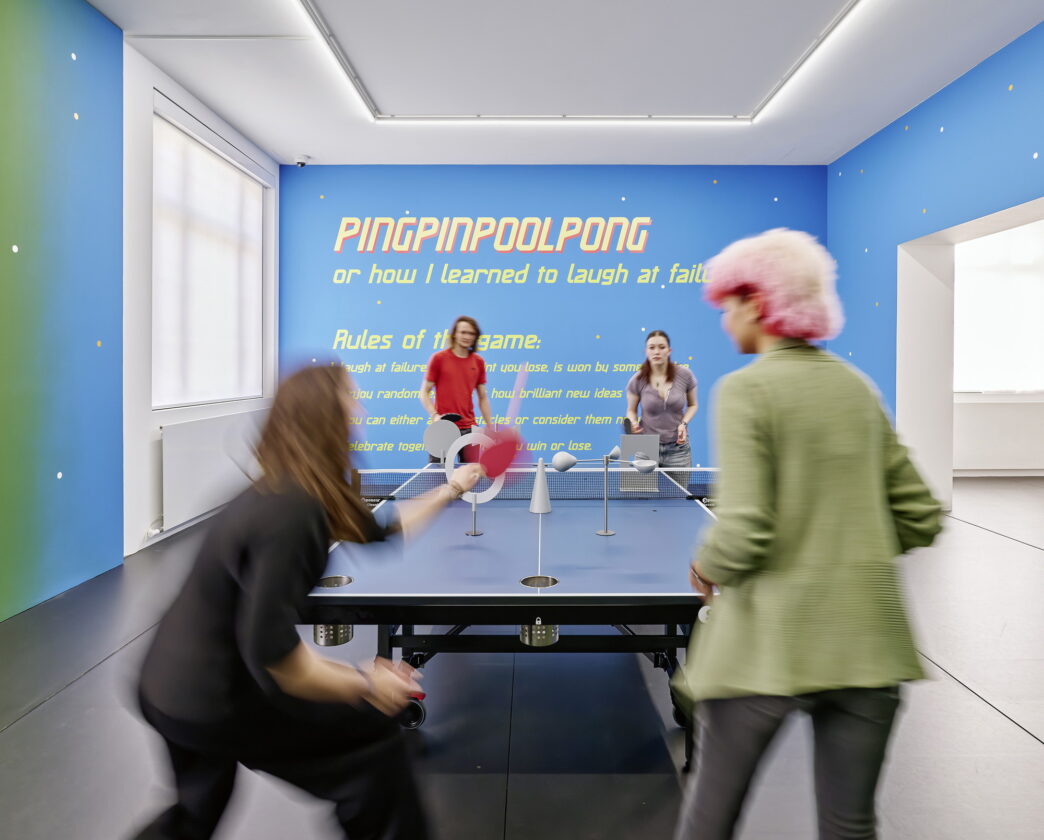
The Helmut-Kraft Art Prize is distinguished by its structural commitment to the long-term institutional presence of its winners. Rather than a traditional monetary grant, the prize is awarded through the targeted purchase of a significant work, which is subsequently donated as a permanent addition to a public museum’s collection. For the 2026 cycle, the foundation has secured the acquisition of Magdy’s interactive installation, PINGPINPOOLPONG (or how I learned to laugh at failure).
Currently on public display as part of the special exhibition SPIELFELD. Sport & Kunst at the Museum für Neue Kunst, the piece will now transition from a temporary loan to a permanent fixture within the museum’s holdings. This acquisition represents a strategic expansion of the institution’s collection, incorporating a large-scale, interactive work that encourages direct physical and cognitive engagement from the audience.
Redefining the Mechanics of Play
PINGPINPOOLPONG serves as a subversion of conventional sporting structures. The installation modifies a standard ping-pong table by integrating billiard-like holes and a series of interchangeable sculptural obstacles. These elements force the ball to travel in unpredictable, chaotic directions, rendering traditional rules of play obsolete. Visitors are invited to interact with the piece based on a set of instructional rules displayed on the gallery walls, which encourage participants to embrace the inevitability of failure and find joy in the collective experience.
Christine Litz, Director of the Museum für Neue Kunst, spoke to the transformative nature of the work during the announcement. She noted that because the game actively resists standard play, visitors are forced to invent new strategies. She posed the question: how do we navigate these unexpected barriers? Litz suggested that by viewing these obstacles as new friends, participants lean into their individual physical capabilities. By honoring these unique strengths, the work transforms into a shared social experience that allows individuals to perceive one another through a fresh, unburdened lens.
A Global Artistic Footprint
Basim Magdy’s career is defined by his expansive reach across the global art world. His works have been exhibited at numerous major institutions and museums worldwide, solidifying his reputation as a vital voice in contemporary art. His practice is represented in several of the most significant public collections, including the Museum of Modern Art (MoMA) in New York, the Castello di Rivoli Museo d’Arte Contemporanea in Turin, the Sharjah Art Foundation in the United Arab Emirates, and the Centre Pompidou in Paris.
The acquisition of PINGPINPOOLPONG by the Museum für Neue Kunst serves as both a celebration of Magdy’s past achievements and a testament to the ongoing relevance of his work in fostering public dialogue through art.