









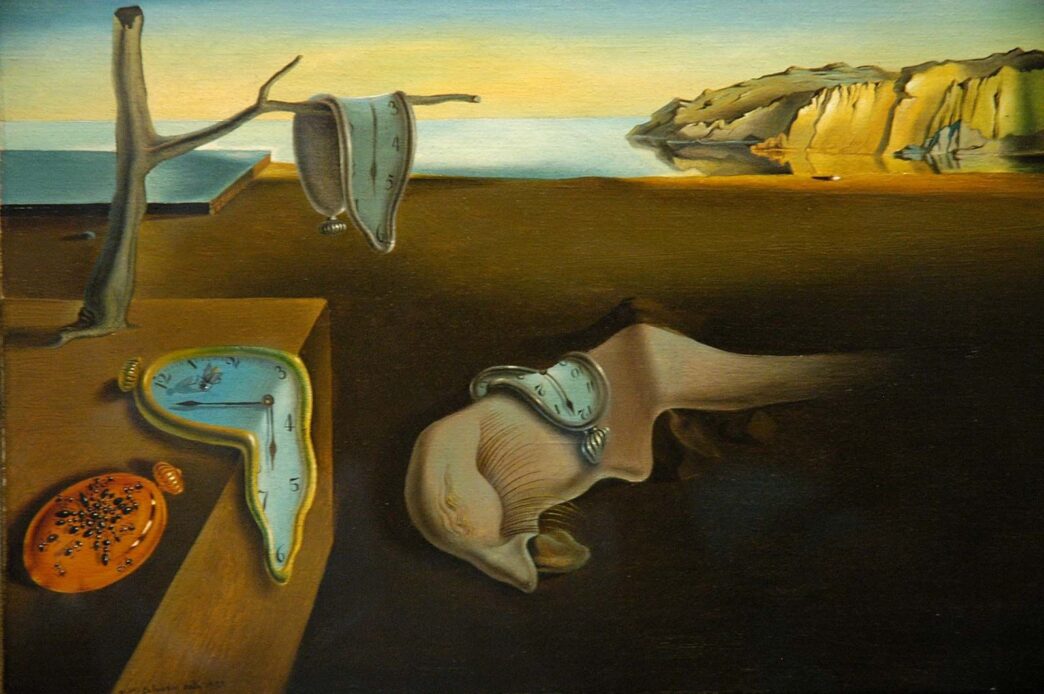
Surrealism, an art movement that emerged in the early 20th century, is characterized by its dreamlike and often bizarre imagery. It sought to tap into the unconscious mind, allowing artists to express their innermost thoughts and feelings without the constraints of reason or logic.
What is Surrealism?
Surrealism is a modernist art and literary movement, launched in Paris in the 1920s, that set out to express the workings of the unconscious mind. The art movement most closely tied to dreams and the unconscious, it was formally announced in André Breton’s 1924 Manifesto of Surrealism. Its artists wanted to free imagination from logic, convention and rational control. The result was a surreal world of impossible scenes, strange juxtapositions and dream logic.
Origins and Influences
Surrealism can trace its roots back to the Dada movement, which emerged during World War I as a reaction against the horrors of war and the rationalism of modern society. Dada artists sought to challenge traditional notions of art and culture, and their emphasis on the absurd and irrational would later influence the development of Surrealism.
One of the most significant influences on Surrealism was the work of Sigmund Freud, the Austrian neurologist and psychoanalyst. Freud’s theories of the unconscious mind and the power of dreams provided a framework for Surrealist artists to explore the depths of their own psyches.
Key Characteristics of Surrealist Art
The Subconscious in Surrealist Art: What Do the Images Mean?
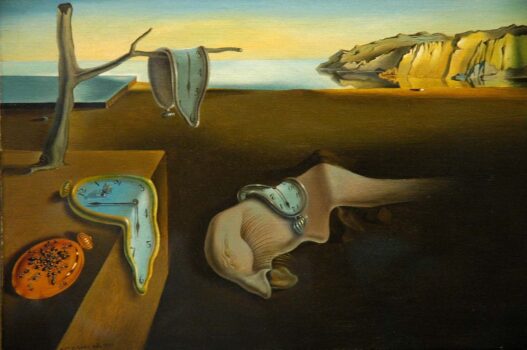
Surrealist images rarely have a single, fixed meaning. Many artists treated them as visual versions of dreams, where the subconscious speaks in symbols instead of plain statements. Melting clocks, floating objects and hybrid creatures were not meant to be decoded like a puzzle. They were meant to unsettle viewers and draw out their own associations.
Freud’s ideas about dreams, desire and repression shaped how Surrealists thought about the psyche. The meaning of a Surrealist artwork often lies in the viewer’s reaction as much as in the artist’s intent. Techniques such as automatic drawing, frottage and decalcomania let artists give up some conscious control. The aim was to let the subconscious shape the image.
- Dreamlike imagery: Surrealist artists often depicted scenes that appeared to be taken directly from dreams, featuring illogical and fantastical elements.
- Automatic writing and drawing: Surrealists used techniques such as automatic writing and drawing to bypass conscious thought and allow their unconscious minds to express themselves freely.
- Juxtaposition of incongruous objects: Surrealist artists often combined seemingly unrelated objects or elements in their compositions, creating a sense of disorientation and wonder.
- Exploration of the subconscious: Surrealism aimed to uncover the hidden depths of the human psyche, revealing the irrational and illogical aspects of our minds.
- Social and political commentary: While Surrealism was primarily concerned with exploring the unconscious mind, many Surrealist artists also used their work to address social and political issues.
Surrealist Themes and Techniques
Transformation: Surrealist art is full of metamorphosis, with bodies, objects and landscapes dissolving or turning into something else. Dalí’s Metamorphosis of Narcissus (1937) is a classic example.
Illusionistic precision: Some Surrealists, notably Dalí and Magritte, painted impossible scenes in meticulous, photographic detail. This illusionistic Surrealism makes the irrational feel convincingly real.
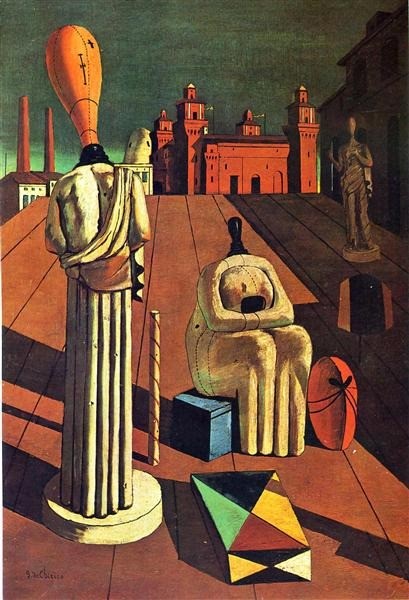
Perspective and space: De Chirico’s deep, distorted perspective, with long shadows and empty squares, creates a feeling of waiting and unease. Other artists used abstract, biomorphic space instead.
The uncanny: Familiar things made strange, an idea drawn from Freud’s concept of the uncanny, sit at the heart of the movement.
Beyond painting: Surrealism also shaped poetry, film and photography. A well-known example is Buñuel and Dalí’s 1929 film Un Chien Andalou.
Famous Surrealist Artists
Salvador Dalí: Perhaps the most famous Surrealist artist, Dalí is known for his iconic images, such as “The Persistence of Memory,” which features melting clocks in a dreamlike landscape.
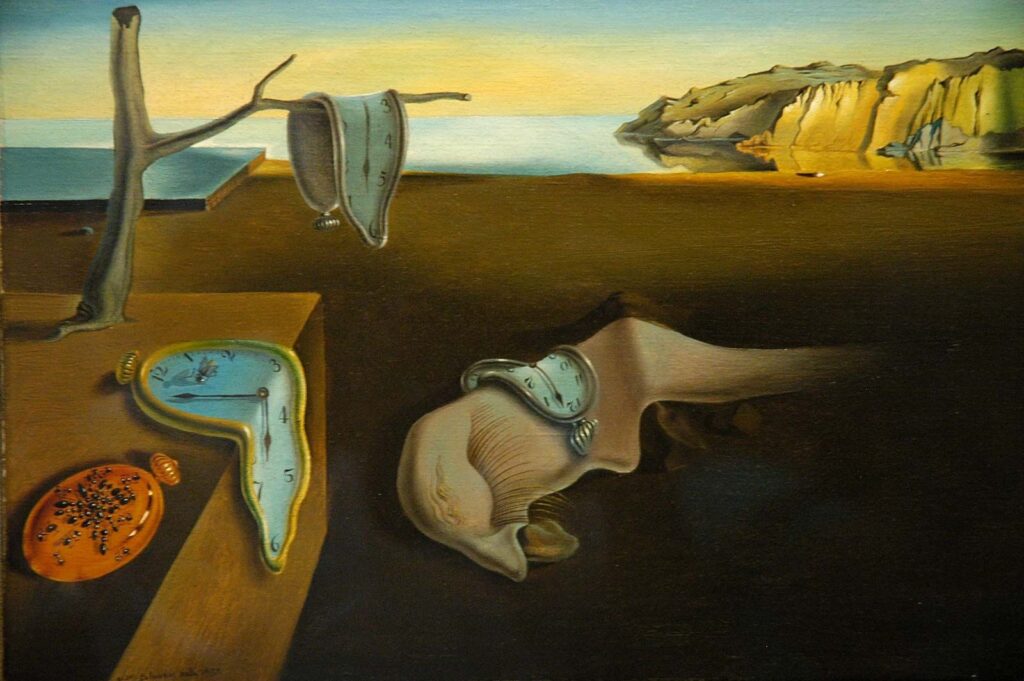
René Magritte: Magritte’s work is characterized by its enigmatic and often humorous imagery, such as “The Treachery of Images,” which depicts a pipe with the caption “Ceci n’est pas une pipe” (This is not a pipe).
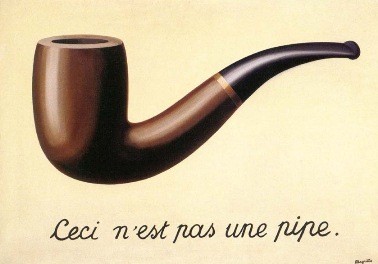
Joan Miró: Miró’s playful and colorful paintings often feature abstract shapes and symbols that evoke a sense of childlike wonder.
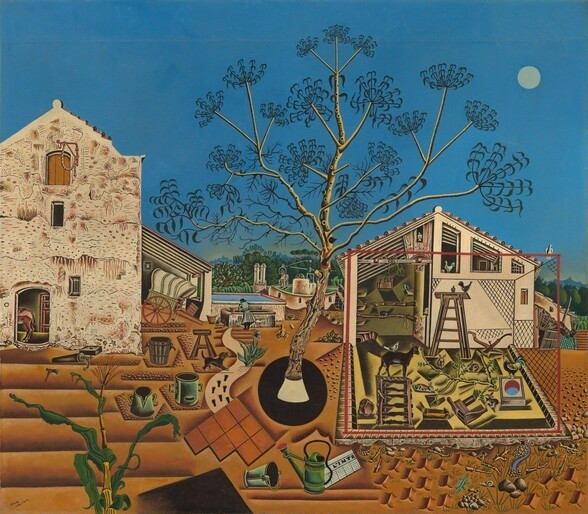
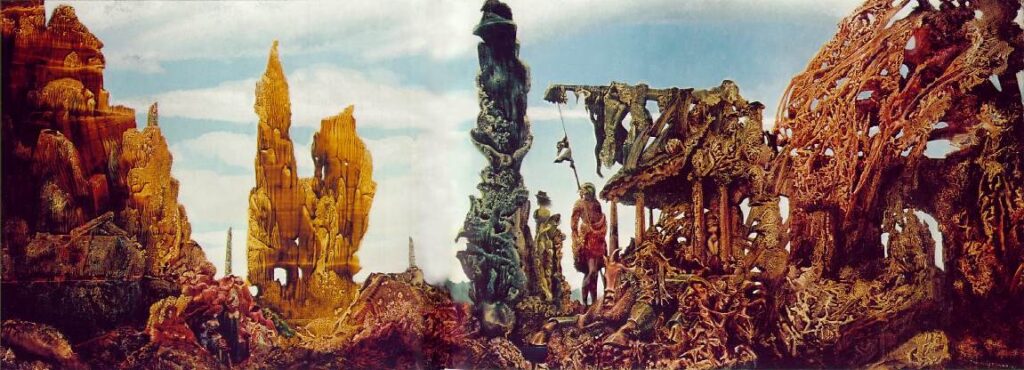
Max Ernst: Ernst was a prolific artist who experimented with a variety of techniques, including collage, frottage, and decalcomania. His work often featured dreamlike landscapes and bizarre creatures.
Giorgio de Chirico: De Chirico’s paintings often featured desolate cityscapes and enigmatic objects, creating a sense of mystery and melancholy.
Key Figures Beyond the Painters
Surrealism began as a literary movement before it became a visual one. André Breton was its principal theorist and author of the founding manifesto. Paul Éluard (born Eugène Grindel) was one of its leading poets and collaborated with many of the visual artists.
The Legacy of Surrealism
Surrealism’s influence is visible well beyond galleries. Its dream logic runs through film, fashion, advertising and graphic design, from Schiaparelli’s collaborations with Dalí to today’s digital art. Contemporary Surrealism, sometimes called neo-Surrealism, continues to use unexpected imagery to explore identity, technology and the 21st-century mind. Many people also use “surreal” as a simple everyday word for anything dreamlike or bizarre.
Surrealism FAQ
Which art movement explored the unconscious mind?
Surrealism. Its artists drew on dreams, free association and chance to express subconscious thoughts and desires.
What is the difference between the unconscious and the subconscious in art?
In everyday use the terms overlap. Surrealists, influenced by Freud, generally spoke of the unconscious: the hidden part of the mind that shapes dreams, fears and desires.
What are the main themes of Surrealism?
Dreams, desire, transformation, the uncanny, chance and the clash between reason and imagination.
Is Surrealism still alive today?
Yes. Contemporary artists and designers continue to work in Surrealist ways across painting, film, fashion and digital media.